A proposed factory and money recorded in an international account can both become an investment headline. They are not interchangeable evidence. Reading them as though they were risks turning a company’s plans into a completed benefit for the people expected to live alongside the project.
ECLAC’s June 23, 2026 release reports that Latin America and the Caribbean received $194.233 billion in foreign direct investment in 2025, an increase of 1.7% from 2024. Brazil and Mexico together accounted for 62% of those inflows. The regional total therefore needs a map beside it: it does not describe an identical investment experience in every country.
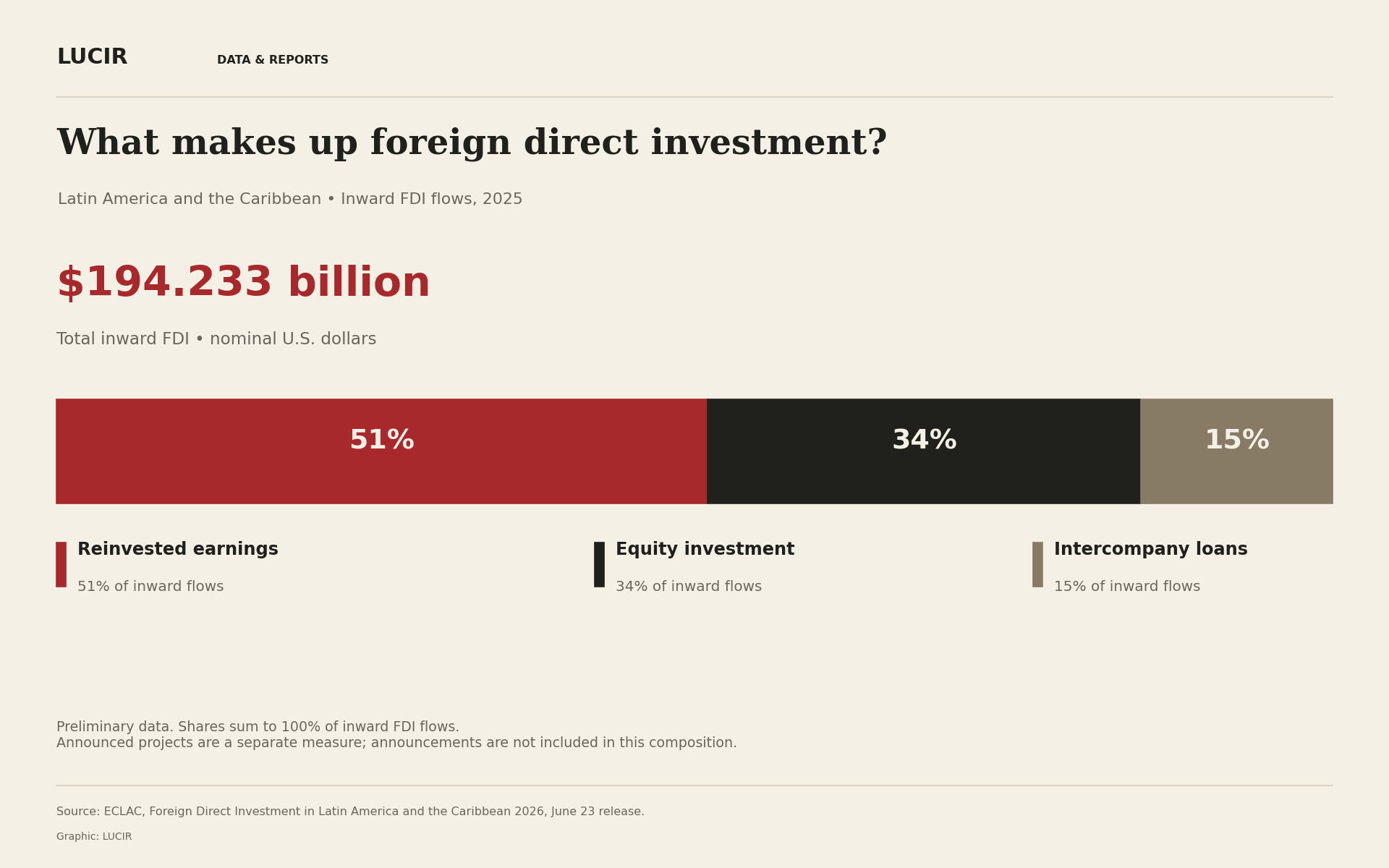
The composition also matters. ECLAC reports that reinvested earnings represented 51% of the year’s inflows, equity investment 34% and intercompany loans 15%. A reader imagining the entire total as newly announced buildings or equipment would miss how much of the reported flow belonged to other financial relationships.
The executive summary makes a separate point about project announcements. There is no guarantee that announced investment will happen, when it will happen or how much will ultimately be invested. The document explicitly warns against comparing announcements directly with balance-of-payments statistics. An announcement series can help examine intentions without becoming proof of completed construction.
That distinction changes the next question. If a company promises a production site, reporting should ask about permits, financing and the timetable. If a statistical release records capital flows, reporting should identify their components and period. Neither task is improved by borrowing the strongest-sounding number from the other.
The summary also labels the 2025 regional figures preliminary and nominal. Authorities may revise them, and the figures are not stripped of inflation. Its Mexico note identifies a further comparison problem: different official presentations use different balance-of-payments frameworks. An apparent contradiction between two totals needs a methods check before it becomes an accusation that one agency counted incorrectly.
For Latino readers following businesses across borders, these are practical editorial distinctions. A supplier considering a proposed expansion, a municipality discussing infrastructure and a family following economic news from home may care about different stages of the same investment. The aggregate cannot say whether a particular contract has been signed or a promised opening has occurred.
The strongest coverage would follow a project through those stages and report who can verify each one. Community consultation, local purchasing and environmental obligations deserve their own evidence rather than being presumed from a capital total. A larger flow may be economically significant without answering those questions.
ECLAC’s report is useful because it keeps several measurements in view. The responsibility of a headline is to preserve their boundaries. Money received, earnings reinvested and projects announced belong in the same conversation, with clear labels and without substituting one for another.