A paycheck tells one story about a family’s finances. What remains after debts are subtracted from assets tells another. For Latino representation, the distinction matters: an account of economic contribution can describe what people produce while leaving unanswered what they own, owe and can draw upon when plans change.
The Census Bureau’s July 2026 wealth brief uses the 2025 Survey of Income and Program Participation to describe the end of 2024. That sequence is important. These are newly published findings about an earlier period, not a reading of household finances in October 2026.
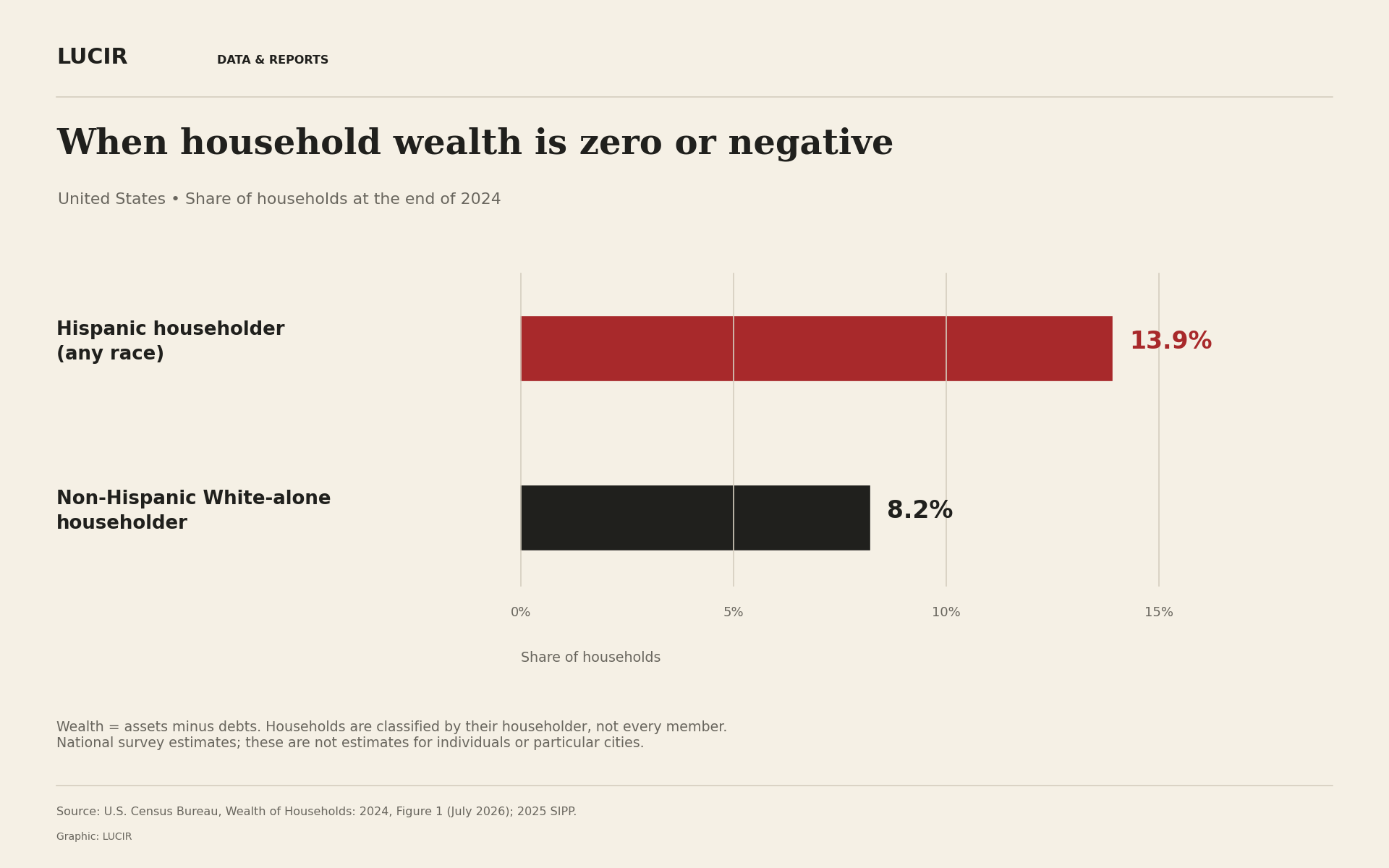
In Figure 1 of the report, 13.9% of households with a Hispanic householder had zero or negative wealth. The corresponding estimate for households with a non-Hispanic White-alone householder was 8.2%. At the other end, 6.3% of Hispanic-householder households were in the $1 million-or-more category. These percentages describe households classified by the householder, not the percentage of individual Latino adults at each wealth level.
The report identifies the householder as someone whose name is on the home’s deed or lease. Its Hispanic category includes people of any race. A household can contain people with different identities; the label does not turn all its members into one demographic profile. Nor should the national results be presented as estimates for Puerto Ricans in New York, Mexican Americans in Texas or any other particular community.
The Census Bureau’s explanation of its wealth statistics emphasizes distributions, asset ownership and median net worth. That offers a useful way to read the release: start with who is being counted, then ask which part of the distribution answers the question. The middle household and the household facing a shortfall are different points of inquiry.
For example, a grantmaker assessing whether an artist can absorb an unpaid development period needs more than a community-wide success story. The relevant questions include access to cash, continuing expenses and the obligations shared with relatives. That is an example of what further reporting should investigate, not something this national chart establishes about artists.
Likewise, zero net worth should not be treated as a description of somebody’s talents, future earnings or contribution to family life. A balance sheet is a particular accounting frame. It deserves close attention precisely because it is limited, rather than because it can summarize a person.
The useful next step for local coverage is to put the aggregate beside evidence from people and institutions making decisions: who qualifies for support, what resources an application assumes and how long a household is expected to wait for payment. The Census release gives that inquiry a starting point. It does not supply the individual stories or prove what caused the differences.