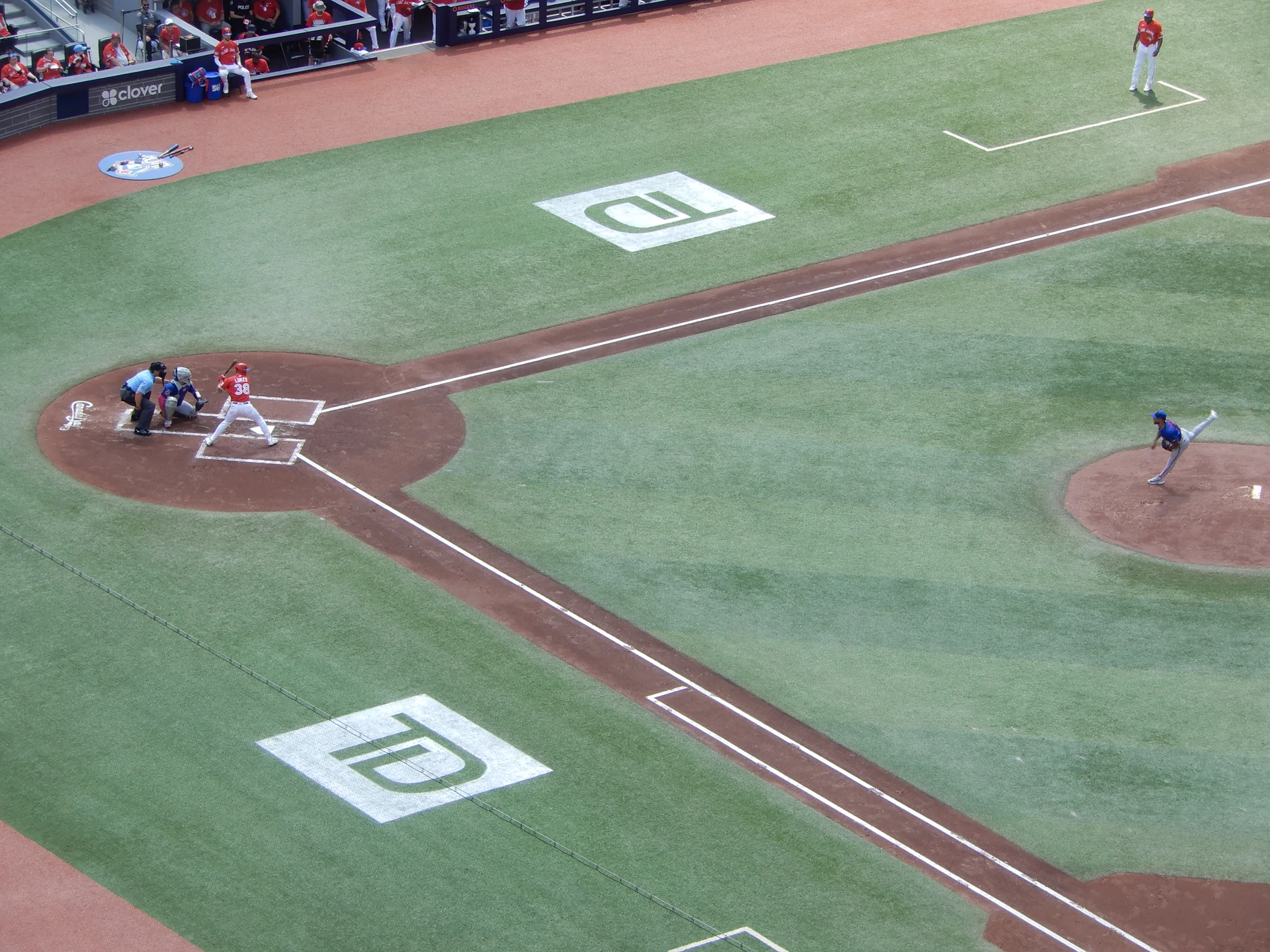

Freddy Peralta is scheduled against Cam Schlittler in Yankees–Rays ALDS Game 2 on October 5 at 8 p.m. ET, according to MLB’s preview. For a pitcher whose employer changed twice this year, the assignment gives a complicated season a very immediate test.
The right-hander from Moca, Dominican Republic, is a Tampa Bay player. His official transaction record shows Milwaukee trading him to the Mets on January 21 and New York sending him to the Rays on August 2. Tampa Bay announced that acquisition in exchange for Gary Gill Hill, Aidan Smith and Émilien Pitre. An old image in a Brewers uniform is now historical context rather than a guide to where to find him.
The statistical contrast is clear. The same official profile gives Peralta a 4.42 ERA over 169 innings in 32 starts for 2026. Its last-seven-games split shows a 1.76 ERA across 41 innings, with 33 strikeouts, 10 walks and a 0.85 WHIP. The shorter stretch describes substantially fewer baserunners per inning and fewer earned runs. It offers evidence of better recent results; it does not, on its own, identify what caused them.
That distinction is central to reading a playoff starter. A full-season average can obscure a change in performance because the earlier innings remain in the calculation. A short run can exaggerate a change because it contains fewer opportunities for outcomes to fluctuate. Choosing one number and ignoring the other would make the assessment simpler, but less useful. The most defensible reading holds both in view.
There is also a difference between describing recovery and declaring a successful organizational repair. A trade establishes when a player changed teams. It cannot prove, by itself, that new instruction, a new environment or a new pitch caused subsequent improvement. Making that case would require a closer examination of pitch selection, location, opponents and the player’s own account. The records here establish movement and results, leaving the mechanism open.
For viewers, the practical questions are closer to the next inning than to a grand verdict on the trade. Can he limit free passes? Can he finish plate appearances before a long inning increases the pressure on the bullpen? Those questions remain worth watching regardless of the final score. A win or loss is a team outcome, and even a postseason start cannot answer every question about a pitcher’s season.
Peralta’s route gives Dominican fans another reason to check the name beneath the uniform rather than rely on last season’s associations. October can make careers look fixed in a single image. This one arrives with a transaction log, two different statistical windows and an outcome still to be played.