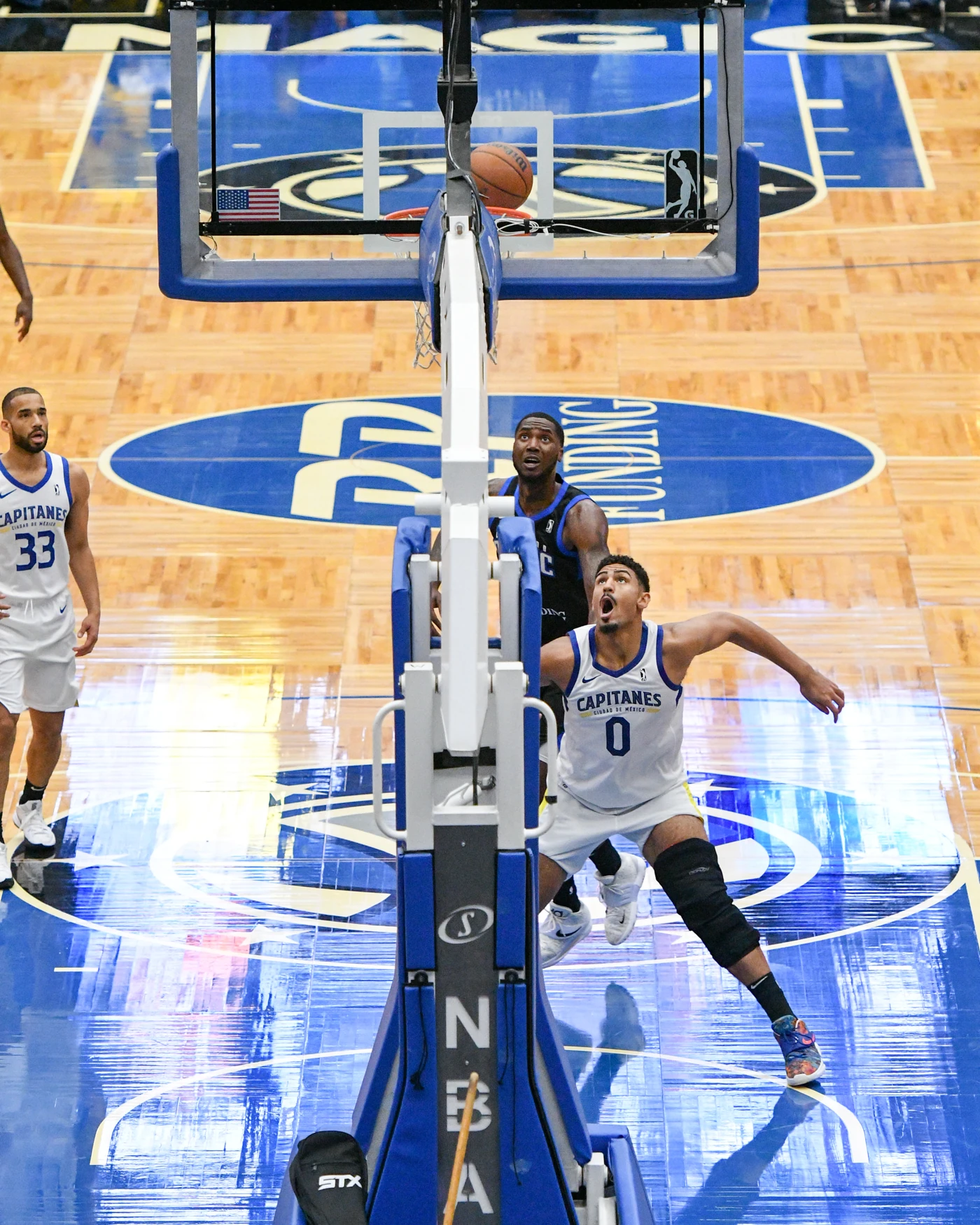

Capitanes will have 24 home games at Arena CDMX in 2026–27, according to the club’s season announcement. That number is the useful starting point for understanding its place in Mexico City basketball. A recurring schedule gives supporters repeated opportunities to follow a team, learn its opponents and judge how it changes. The relationship has time to become more detailed than a single visit to an arena.
The club opens away against Oklahoma City Blue on November 6. Its home opener follows November 8 against Texas Legends, with a second meeting November 10. The announced competition format has a 14-game Tip-Off Tournament, after which records reset for a 36-game regular season. Capitanes begin that latter phase at home against Valley Suns on December 27. Fans following standings should therefore check which portion of the schedule a record describes.
Continuity is more complicated on the roster. In a September 9 transaction announcement, Capitanes said they acquired Cody Martin’s returning rights and Osceola’s 2027 second-round pick. Noblesville received the returning rights to Wade Taylor IV and Patrick Gardner; Osceola received those of Au’Diese Toney. The distinction between a player and the rights associated with a player is essential to understanding the news.
The team’s explanation of returning rights describes a claim retained when a player returns to the G League, with those rights themselves available for trade. Acquiring that claim is not confirmation that Martin has signed or will appear in a Capitanes game. The announcement establishes an option for roster construction. Treating it as a completed signing would give fans certainty the transaction does not supply.
There is a separate development effort beyond the professional schedule. An August alliance with Tecnológico de Monterrey announced academies in Puebla and Metepec and a youth tour running from September 2026 through February 2027, with stops planned in Puebla, Monterrey, Mérida and Mazatlán before a Mexico City conclusion. Those are announced activities, not evidence yet of participation levels or lasting outcomes.
Together, the calendar, rights transaction and academy plans offer three different measures for following the club. The first can be judged through games actually played. The second needs a later roster decision before its on-court significance is clear. The third should be assessed through access, participation and sustained instruction rather than the ambition of an announcement.
A season-long basketball relationship becomes interesting through those distinctions. Supporters can celebrate a home opener while asking precise questions about the next lineup and the reach of a youth program. Capitanes’ coming campaign supplies a calendar for that attention. The work of measuring what the club delivers will continue after opening night.