We have a habit of celebrating a film once it becomes an achievement: the premiere, the photograph, the award, the announcement that somebody finally got through the door. Then we behave as if the door opened itself. A producer’s name can sit a few lines below the person everyone recognizes, even when the work being celebrated depended on several people making the thing possible.
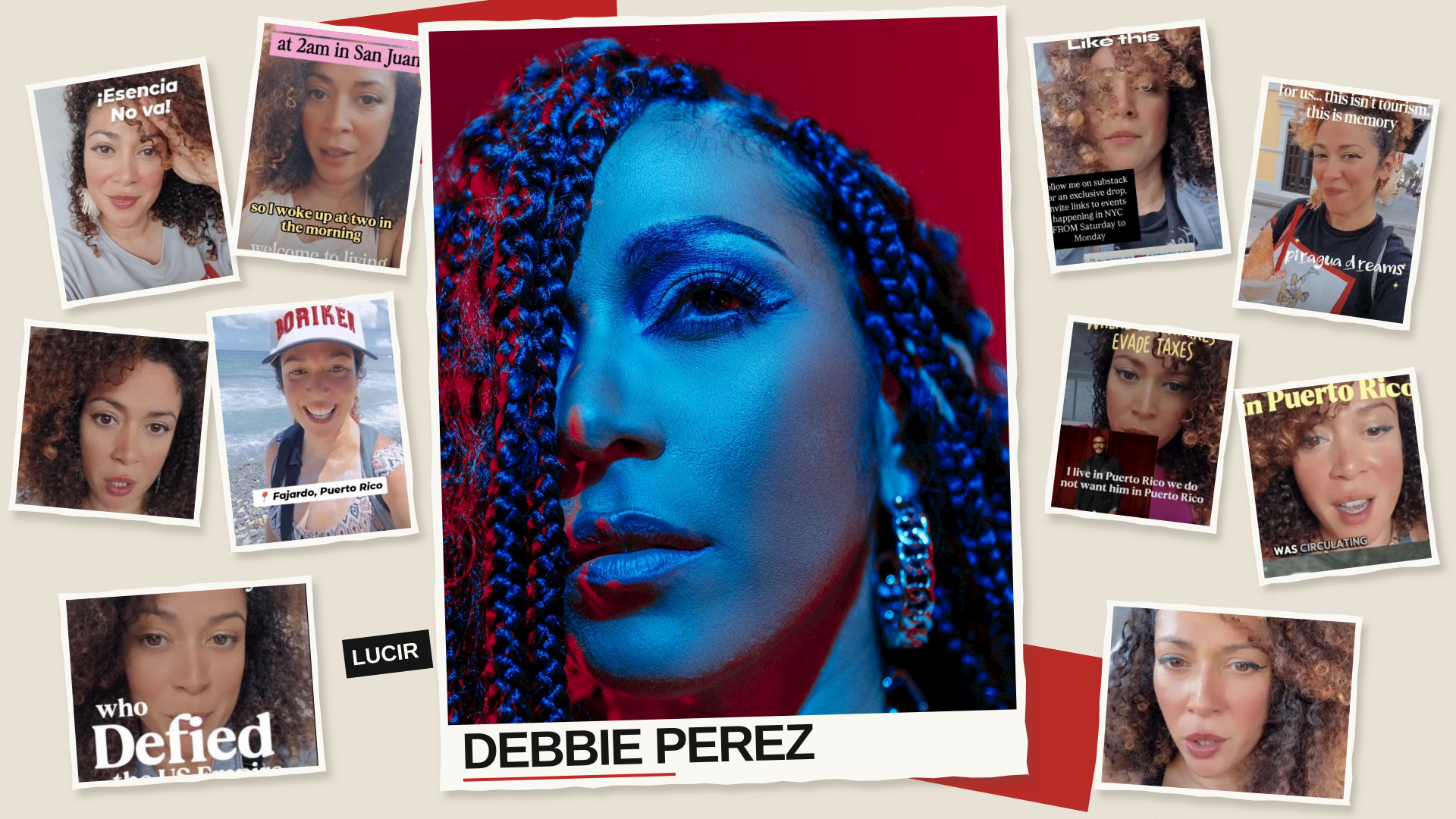
Debbie belongs in that conversation. Her professional portfolio identifies her as a Puerto Rican filmmaker, writer and producer. Audiences also know her through Borikén Podcast. Film credits frequently list her as Debora Perez. Follow those credits and a body of work emerges that moves between imagined futures, historical memory and the lives people are trying to build right now.
There is no rule requiring those stories to look alike. In her work, they don’t.
A future with reggaetón in it
Take Nuevo Rico, the animated short directed by Kristian Mercado Figueroa. Its premise is wonderfully excessive: a supernatural discovery sends two siblings toward reggaetón fame, where success proves costly. Debbie produced the film alongside Kate Chamuris and Ángel Manuel Soto. Mercado and Juan J. Arroyo receive writing credit; Jackie Cruz voices Barbie and Antonio Vizcarrondo voices Vico. The published credits name the people doing the work.
Urbanworld’s description places the film within Latinx futurism and connects its imagined world to Puerto Rican culture, commercialization and colonialism. That combination matters. Puerto Rican culture can be treated as a ready-made soundtrack: press play, enjoy the rhythm, leave the history outside. Here, culture carries the story and its questions about what happens when something rooted in a people becomes a commodity.
Nuevo Rico won the Animated Shorts Jury Award at SXSW in 2021, as documented in contemporary reporting and an interview with Mercado.
What interests me beyond the award is the creative freedom the project claims. A Puerto Rican story gets to be strange. It gets to be animated, celestial, musical and politically alert. Nobody should need to file an application proving that the Caribbean is qualified to imagine tomorrow.
Grief, mothers and the room to be whole
Debbie’s producing credits also include Daughter of the Sea, written and directed by Alexis C. Garcia. The festival synopsis frames a return to Puerto Rico, family bereavement and a connection to Yemaya as the beginning of the young protagonist’s transformation. Reel Sisters’ programme credits Debora Perez as producer; the director’s release identifies Princess Nokia as the star and Niambi Sala as Yemaya.
Family, grief and spiritual knowledge occupy the center. They can be the world through which a story moves, rather than an educational appendix prepared for someone presumed to know nothing about us.
The collaborators matter, too. ILLUMINATE’s festival record names Joshua Echevarria as cinematographer, Matt Detisch as editor, René G. Boscio as composer and Gabriel J. Serrano for sound design. Giving a producer her due should make that larger creative effort more visible.
Then there is Mela, another Mercado film. Debbie’s project description follows a dancer and single mother negotiating childcare, family disapproval and the effort to reach an important audition. The ambition is real. So is the schedule.
Mercado’s published credits include Debbie among the producers and name Mela Murder, Summer Rose Castillo and Caridad de La Luz in the cast. Slamdance’s programme also lists her producing involvement.
The range is the point. Futurism, spirituality and the practical business of childcare all belong in a creative life. A familiar surname on a poster does not, by itself, tell us how fully we are being represented. The stories need room to differ. So do the people making them.
Bringing Pedro into the room
With Mataron a Pedro, also presented as They Killed Pedro, Debbie’s work enters the terrain of historical memory. LALIFF’s programme describes Pedro Albizu Campos and his wife being drawn into Puerto Rico’s growing labor movement in the 1930s, as farmers press him to confront colonial power and conditions in the sugarcane fields.
The festival lists Mercado as director and screenwriter, with Ismael Cruz Córdova, Juana Burga and David Koechner in the cast, and Debbie among the producers. Its credits also include cinematographer Diana Matos and production designer Mailara Santana. The production campaign identifies Debbie’s role as executive producer and names collaborators including executive producer Ivelyse Andino and line producer Krizia Belen.
Following its LALIFF world premiere, the Museo de Arte Contemporáneo de Puerto Rico and Estudio LA18 announced a CineMAC presentation as the film’s Puerto Rico premiere.
A historical film reaches the screen through a very contemporary network: research, financing, production, technical labor and people helping an audience find it. The history on screen and the labor behind it deserve attention together.
Bringing that history into a room also makes discussion possible. What were we taught? What was left out? Who decided? A film cannot do the whole work of historical education. It can give that work an opening.
The podcast is part of the work
Borikén Podcast extends those questions beyond the festival calendar. In her statement about the programme, Debbie connects Puerto Rican history, displacement, culture and mental health. She describes learning alongside the audience and bringing artists, musicians, experts and community leaders into the conversation.
Her professional biography describes a background in public health, healthcare technology and research ethics, along with archival research involving the Archivo General de Puerto Rico and the Center for Puerto Rican Studies. Those interests help explain why her work keeps returning to the relationship between personal lives and the systems shaping them.
One example is her conversation with the directors and cast of Esta Isla. She directs attention to other filmmakers and to the opportunities Puerto Rican artists need to tell their stories. That is a contribution worth recognizing in its own right: making room for work beyond your own.
We talk constantly about building community. Helping an audience discover somebody else’s film is one place to start. So is asking a question that gives an artist room to explain what they are trying to do. So is using a platform to make another person’s work harder to overlook.
Culture has a coastline
Debbie’s public work also reaches into current community struggles. In “Racing Toward the Dawn”, she described her plan to cover ultramarathon swimmer Eva Buzo’s journey from Rincón toward Cabo Rojo in solidarity with resistance to the Esencia development. She acknowledged Defiende a Cabo Rojo and the organizing already underway, and described bringing a camera, questions and coverage for people in the diaspora.
The participating organization Amigos de Tres Palmas credited Borikén Podcast, Gabo Ramos and Darlien Morales for media logistics during the swim.
That is a specific contribution: documenting, connecting and helping people see what is happening. It also belongs to a collective effort whose organizers and participants deserve their own credit.
The development dispute itself requires care. Associated Press reported the government’s authorization of Esencia, environmental opposition and the developers’ conservation commitments. Centro de Periodismo Investigativo examined water-supply questions. Those competing claims cannot be resolved simply by celebrating a compelling photograph or a courageous swim.
But the connection to cultural work is clear. Culture is made by people living somewhere. Celebrating Puerto Rico while losing interest in whether Puerto Ricans can remain, obtain basic services and participate in decisions about their communities is a very convenient definition of appreciation.
Convenient for somebody, anyway.
Debbie’s coverage asks an audience at a distance to pay attention to people doing the work on the ground. The diaspora can do more than remember. It can listen, learn and remain involved.
The next story is still being built
Her portfolio identifies Killing Cornelius Rhoads as a science-fiction feature in development, with Debbie as writer and producer. The project connects speculative storytelling with Puerto Rican histories of sterilization and birth-control trials. It is still in development; a release date has not been established in the material reviewed.
Its place on her slate helps make sense of the wider body of work. The imagined future and the historical archive keep meeting. What has the past made possible? What has it damaged? Who gets to challenge its consequences, and through whose eyes will we see that challenge?
Debbie approaches these questions through producing, developing her own writing, interviewing other creators and documenting public life.
That is why her work belongs in LUCIR. We need to recognize the people helping stories exist, helping them travel and helping communities remain connected to what those stories are about. Visibility has value. So does the work that makes visibility possible in the first place.
Debbie Perez is helping make stories, helping other stories find an audience and helping an audience remain connected to Puerto Rico beyond its most marketable images. Those are distinct forms of labor. Together, they tell us considerably more than a photograph with someone famous ever could.
Puerto Rico is not short on people with something to say. The work is making room for them to say it, helping the story travel, and remembering to name who helped it get there.