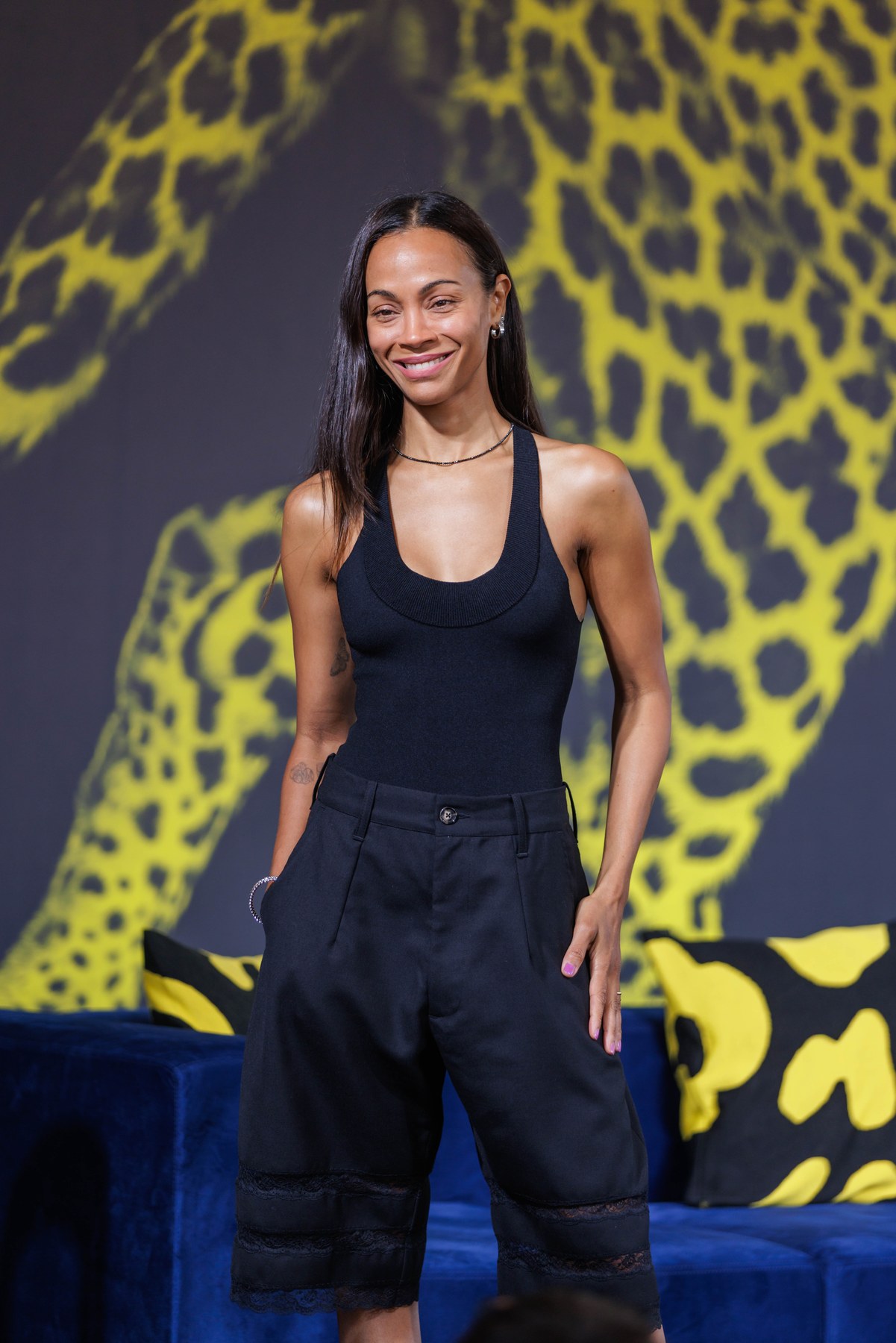
At the Locarno Film Festival in August, Zoe Saldaña described being the only woman or person of color onstage, waiting to discuss her craft, and instead receiving the question about making cinema more inclusive. As ScreenAnarchy reported, she directed that question toward the industry’s gatekeepers.
That is where this conversation needs to continue.
The Daily Beast’s headline emphasized pressure to “get political.” Its article supplied the context: unequal questioning. That distinction matters. Redirecting responsibility is not refusing to care about inclusion.
Who approves development money? Who gets hired to direct? Whose script moves forward? Who gets another chance after a project fails? These questions belong with studio heads, financiers, producers and the people whose decisions determine which careers can grow.
Saldaña’s own executive-producer role on Lioness belongs in that examination. A credit does not establish precisely which decisions she controls. Accountability should follow actual authority, wherever it sits. Her point about uneven questioning remains worth pursuing across the industry.
Saldaña has put that influence to work. The Television Academy credits her with assembling Latina creatives for Gordita Chronicles, a comedy centered on a Dominican immigrant family. She also launched BESE in 2018 to spotlight underrepresented stories. Those contributions sharpen the question for other decision-makers: what are they doing with their power?
Her work supplies another part of the conversation. In Deirdre Durkan’s September 27 PEOPLE interview, she described months of preparation for Lioness: “I’m number one on the call sheet. I am first one in, last one out.”
That commitment has a history. In 2006, she was already telling BlackFilm’s Brad Balfour about producing stories missing from the screen and trying to raise money for an adaptation of Jamaica Kincaid’s Lucy. There is a longer record here of trying to move stories toward an audience.
Her Blackness and Dominican and Puerto Rican heritage matter, too. An Afro-Latina’s presence can widen the public understanding of who belongs onscreen. That contribution deserves recognition alongside a serious examination of how opportunities are distributed.
The burden becomes uneven when her identity makes her the default person explaining exclusion while other people’s authority goes unexamined.
The next step is follow-through. Ask the other decision-makers what they have backed, whom they have hired and what they are changing. Press for specifics. Return to the answers.
Saldaña put the question to Hollywood. The conversation should keep moving toward the people who can act on it.