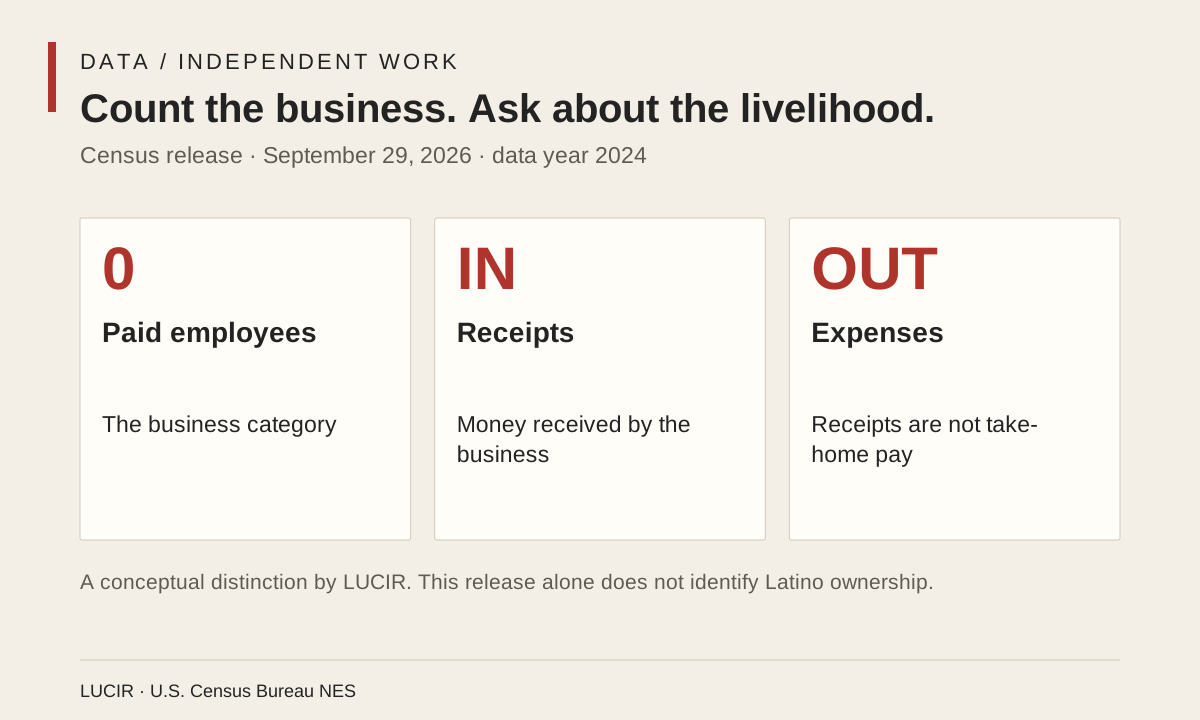
A production business can exist before it hires a crew. A photographer working alone, an editor taking assignments and a consultant serving several clients are hypothetical examples of an economic life that an employee count cannot fully describe. On September 29, 2026, the U.S. Census Bureau released its 2024 Nonemployer Statistics. For independent creators, the useful question is what the category recognizes—and what it cannot tell us about sustaining a practice.
The release covers qualifying businesses with no paid employees. Its tables organize establishments and receipts by industry and geography, with additional detail on legal structure and receipts-size categories. The reference year is 2024. Publishing the figures this September does not turn them into a reading of today’s contracts, prices or working conditions. They are a documented starting point for examining a sector that can disappear from conversations focused entirely on payroll jobs.
The Bureau’s program description explains that the data originate in business income tax records, and that most nonemployer businesses are sole proprietorships. A business may or may not provide its owner’s principal income. That distinction resists two familiar caricatures: the solo operator as an effortlessly thriving entrepreneur, and the same person as someone whose work is too marginal to count. The classification establishes neither prosperity nor failure.
Receipts require another distinction. Money coming into a business is not the same as money remaining for the person running it. An assignment might require equipment, transport, insurance or assistance. Those are examples of costs, not findings about the businesses in this release. Comparing a receipts figure with an employee’s salary without considering expenses would invite a misleading conclusion about how much either worker can live on.
The published table can help a reader locate an industry within a place. It cannot, by itself, identify Latino ownership. A county’s Hispanic population share is not a substitute for owner demographics. Nor can a broad industry category establish how many people perform a specific creative role. A claim about Latino photographers or editors needs data that actually identifies those owners and activities, rather than a demographic estimate laid over an unrelated count.
For a community trying to build cultural institutions, independent businesses matter because production needs places where labor can become an ongoing practice. The new release makes that scale of work easier to examine. It does not settle whether operators can afford to keep doing it. That next inquiry should connect the business count to expenses, bargaining power and continuity of assignments. Visibility in a statistical table is a beginning; a durable livelihood remains a different measure of success.