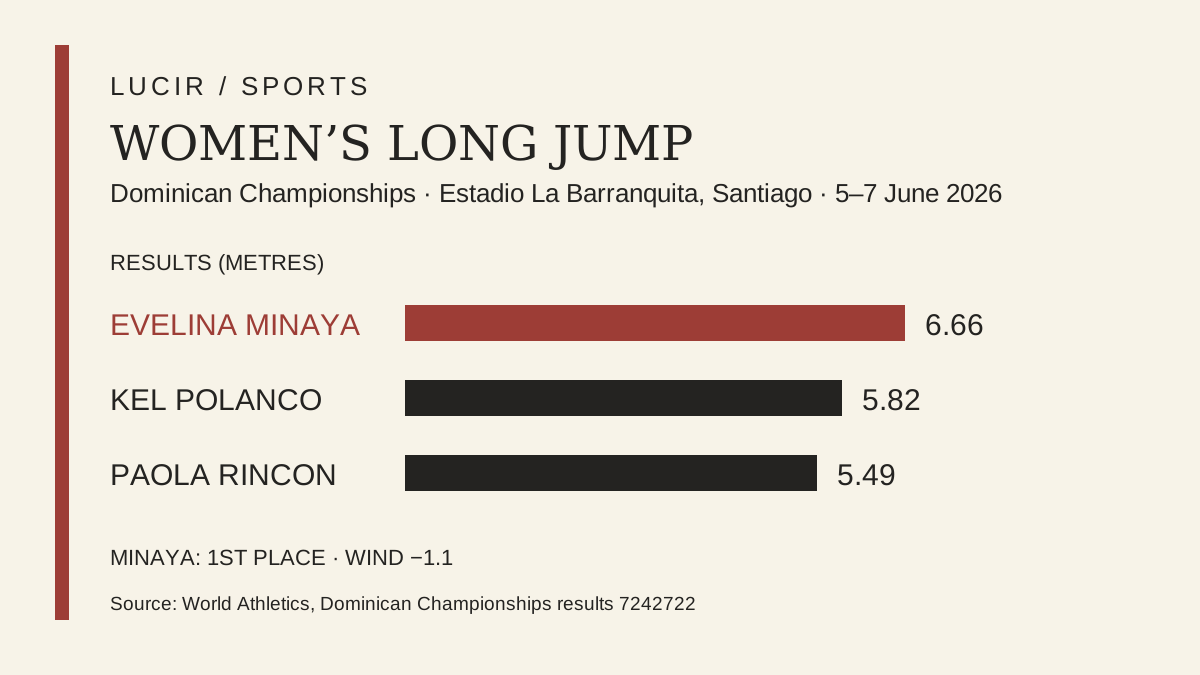
Dominican sports coverage is often pulled toward the games with the largest commercial machinery. The official results from the Dominican Championships offer a different scale of attention. On June 5–7, 2026, at Estadio La Barranquita in Santiago de los Caballeros, World Athletics recorded Evelina Minaya’s winning women’s long jump at 6.66 metres, with a wind reading of minus 1.1. The number is exact, but it is not self-explanatory. A mark records a measurement; it cannot by itself describe the training, travel, coaching, or material support that made a national championship possible.
World Athletics also lists 6.66 metres as Minaya’s national-record personal best, dated June 5, 2026. Her achievement belongs in a larger conversation about which Dominican athletes receive sustained attention, and how they become familiar names. Her winning mark was followed by Kel Polanco at 5.82 metres and Paola Rincon at 5.49. The result gives the event a field, rather than treating a winner as though she performed alone. Athletics is individual at the moment of takeoff, yet every championship result is also made within a system of lanes, judges, facilities, schedules, and other competitors.
The 6.66-metre mark invites a question about recognition. A national championship win is not automatically a global breakthrough, and this record does not promise one. It does establish an accomplishment that belongs in the country’s sports conversation. Too often, women’s track results surface only when they become Olympic headlines. That practice asks athletes to carry the burden of a spectacular exception before their work is allowed to be ordinary public knowledge.
Track and field also has a distinct way of preserving memory. A result holds the date, venue, event, place, and mark together. It remains available after the crowd leaves the stadium. That archive can support a more durable sports culture if institutions, schools, and media use it. Young athletes need more than celebrity examples; they need evidence that national competition has a place for them, that their event exists, and that their performances will be counted.
Minaya’s national title and record provide a good reason to pay attention now. Following a jumper means looking beyond a single viral clip: learning the competition calendar, recognizing the field, and understanding that improvement is measured across a season. A precise result can change what a public notices. It makes room for Dominican women’s athletics as a continuing field of work, not a surprise whenever a record reaches an international broadcast.