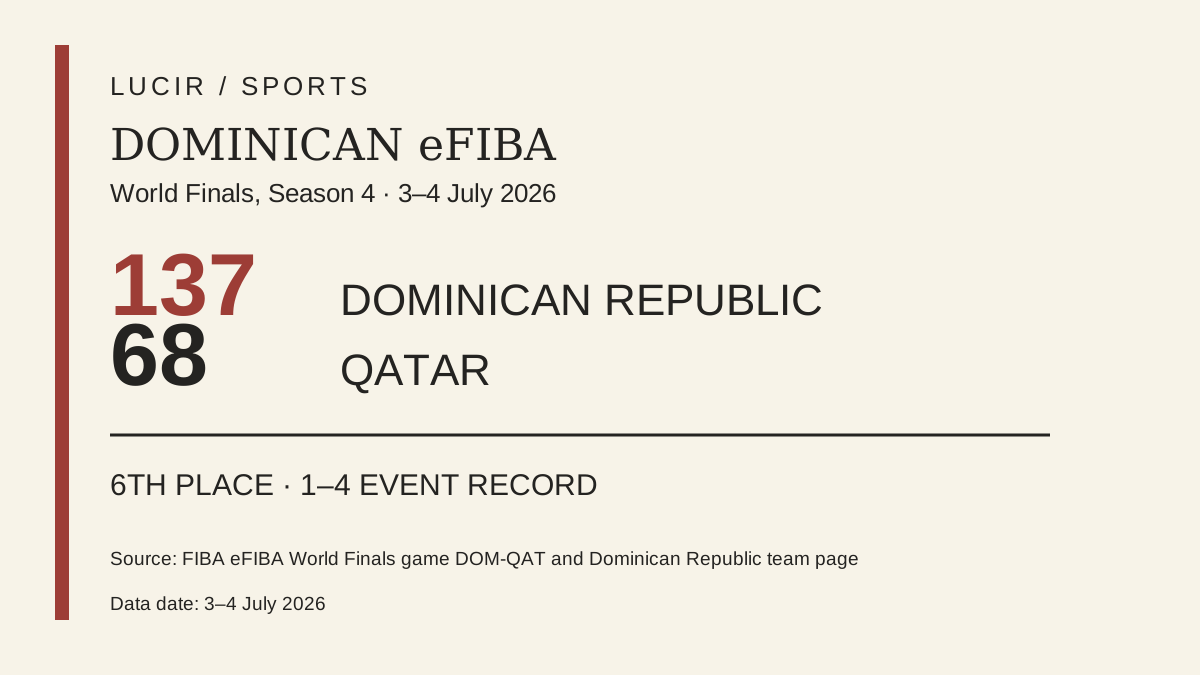
A national basketball result does not always take place on a hardwood court. FIBA’s eFIBA World Finals record places the Dominican Republic sixth in Season 4, with a 1–4 record at the July 3–4, 2026 finals. The team’s opening result against Qatar was 137–68, and the official event page names Cristian Noel De La Rosa, Yadier Gomez, Wady Tactuk Duran, Miguel De Jesus Gonzalez Nuñez, and Jose Felix Martinez Quiñonez among the Dominican players listed in the event statistics. These are not conventional basketball box scores, but they are still a record of organized competition under a national flag.
That distinction matters because digital sport is often treated as a distraction from the “real” game. The FIBA structure says something more precise. The federation records teams, rosters, games, standings, leaders, and formats. A basketball institution has created a route where gaming skill becomes a form of national representation. It does not replace the women’s or men’s physical game, and it should not be confused with it. It adds another space in which people practice competition, strategy, communication, and public identification with a country.
Yadier Gomez is listed as the Dominican side’s leading scorer at 35.6 points per game, while De La Rosa is listed at 25.0. Gomez also led the Dominican side in assists at 6.8 per game; Tactuk Duran averaged 4.8. Those figures point toward a useful feature of eFIBA: individual game tags and legal names appear together in the official record. A player’s online identity is not erased, but neither is it the only name that counts. That pairing gives digital competition a traceable public form.
The 137–68 Qatar result is also a reminder that a score can be large without making the sport simple. The result page identifies an online, single-game format. That opens a different set of questions about access: a reliable connection, a suitable place to practice, and time to build a competitive routine. Calling it a national team should also invite curiosity about how that team is assembled and supported.
Dominican eFIBA deserves attention because it makes a national sports story visible in an unexpected format. FIBA’s records are the starting point, not the final meaning. The opportunity is to ask who gets access to this pathway, how players are supported, and whether a digital national team receives the same seriousness from media and institutions that its official standings already give it.