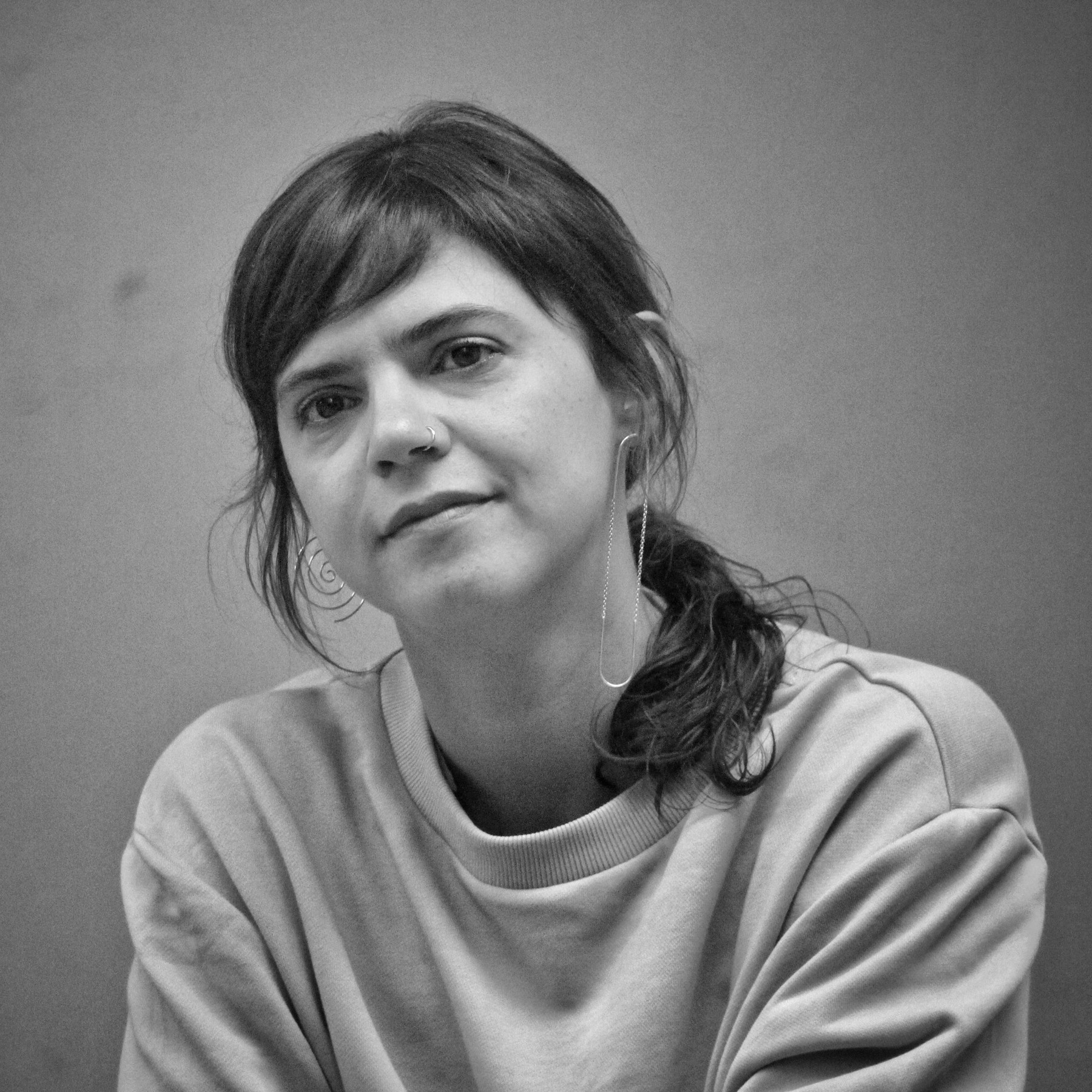
Valeria Luiselli’s Beginning Middle End and Julián Delgado Lopera’s Pretend You’re Dead and I Carry You became National Book Award finalists today, October 6, joining Hannah Lillith Assadi’s Paradiso 17, Edwidge Danticat’s Dèy, and Morgan Thomas’s Mad Eden in Fiction. The announcement brings five distinct accounts of family, belonging, and survival into conversation. For Luiselli and Delgado Lopera, it also creates an occasion to ask what an American literary story can contain.
Beginning Middle End starts in Sicily, where a mother and teenage daughter arrive after the mother’s marriage has collapsed. Nearby are archaeological sites connected to the narrator’s grandmother. As the daughter presses for answers about that earlier generation, the trip becomes a search through family history; the narrator’s own mother is showing signs of dementia. Knopf describes a journey that reaches beyond human generations into myth and geological time.
That premise makes chronology a family problem. A daughter’s questions can reorganize an adult’s account of the past. A mother’s failing memory can unsettle what the next generation expects to inherit. The archaeological setting sharpens the question: what can be recovered, and who decides what the recovered pieces mean? The narrator and her daughter travel through a landscape whose timescale dwarfs its crisis, giving the search for a fresh start a larger, less manageable frame.
Delgado Lopera approaches inheritance through a father and daughter in Bogotá. Ignacio is grieving his wife, while Valentina lives with the consequences of his withdrawal and the unresolved history of her mother’s death. Liveright’s synopsis introduces Mamadora Eléctrica, a travesti from Ignacio’s past who becomes a maternal figure for Valentina. Her presence makes kinship something sustained across biological and chosen family, with care passing between generations.
The author’s account makes the literary stakes especially clear. In a June interview with Public Books’ Writing Latinos, Delgado Lopera explained that he blends Spanish and English during revision, attending to sound and queer registers. The book is mostly in English, even though its story takes place in Colombia. Language here connects the place being remembered with the places from which it can be narrated. His discussion of travesti lore similarly locates storytelling within a trans lineage, with its own inherited knowledge and capacity for mythmaking.
Placed beside Luiselli’s premise, that account suggests an expansive understanding of the family archive: archaeology, interrupted memory, suppressed desire, and communal lore can all become ways of transmitting a past. The connection invites comparison while keeping the histories that shape each telling in view.
The other finalists make those differences consequential. Assadi’s Paradiso 17 follows Sufien, displaced from Palestine during the 1948 Nakba, through a lifelong search for home. Danticat’s Dèy moves among Haiti, Brooklyn, and Miami, taking its title from the Haitian Kreyòl word for mourning. Thomas’s Mad Eden centers a trans healthcare worker in Florida and incorporates an online fantasy serial into its narrative. Palestinian dispossession, Haitian diasporic life, and queer care under political pressure each demand their own historical vocabulary.
Today’s announcement rewards attention to those differences. Luiselli and Delgado Lopera are finalists in Fiction; the awards also maintain a separate Translated Literature category. An author’s origins, a novel’s setting, and the languages it uses are different kinds of information.
The winners will be announced November 18. Until then, this shortlist offers readers a productive question: how does a family story change when its children, its silenced desires, or its missing memories acquire the power to shape its telling?