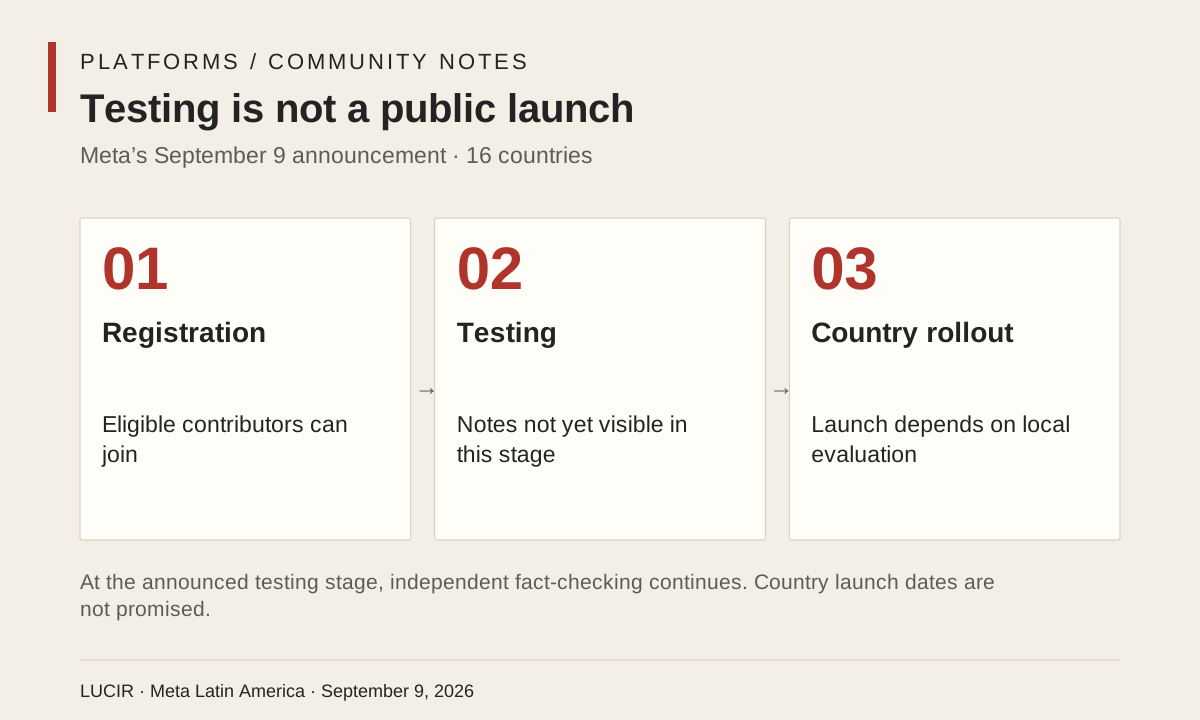
On September 9, Meta said it had begun testing Community Notes in 16 Spanish-speaking countries in Latin America: Argentina, Bolivia, Chile, Colombia, Costa Rica, Ecuador, El Salvador, Guatemala, Honduras, Mexico, Nicaragua, Panama, Paraguay, Peru, Uruguay and Venezuela. The company said eligible people could register as contributors, but that no notes would yet be visible to users. Independent fact-checking would continue during the test. Those details make this a product trial, not a completed change in how misleading posts are handled.
Community Notes asks contributors to supply context on public posts, including posts by Meta and public figures. Meta says a note is published only when contributors who usually disagree judge it helpful. The stated design tries to reward cross-viewpoint agreement rather than simple majority preference. Whether it works country by country is still unproven. Language, political risk, internet access and the size of an available contributor pool can all affect what context gets written and what becomes visible.
For Latino audiences, the regional scale is significant because misinformation does not arrive in a single national format. It circulates in local Spanish, cross-border networks, Indigenous and migrant contexts, visual memes and voice notes. A useful system needs contributors who understand those settings, but it also needs safeguards against harassment and organized manipulation. Meta says it will evaluate performance country by country and that notes will not be published until it has enough contributors and confidence in the product. That is the right claim to scrutinize: not whether registration exists, but whether the eventual system makes context easier to find without exposing participants to harm.
Platforms often describe participation as a substitute for institutional trust. It should instead be treated as one layer of information practice. A Community Note can direct a reader to missing context, but it does not turn every contributor into a reporter, researcher or local expert. Newsrooms and civic groups should continue publishing dated, source-linked explanations that remain available outside a feed. Contributors should also be able to point readers to those durable records instead of being forced to summarize complex evidence in a small platform format.
The September announcement is therefore a test of access and accountability. Its success cannot be measured only by enrollment or the number of notes written. The relevant questions are whether the program reaches a broad contributor base, whether users understand when a note is absent because the trial is incomplete, and whether independent verification remains visible while the system is tested. Meta has announced a staged process. The public should judge the eventual rollout by evidence from each country, not by the promise of a single regional launch.