We spend a lot of time celebrating the people on the cover. We should spend more time with the people who understood why they belonged there.
The writers who asked better questions. The editors who recognized something worth documenting before an industry caught up. The people who kept the names, the neighborhoods, and the history attached to a culture that everybody seems eager to sell.
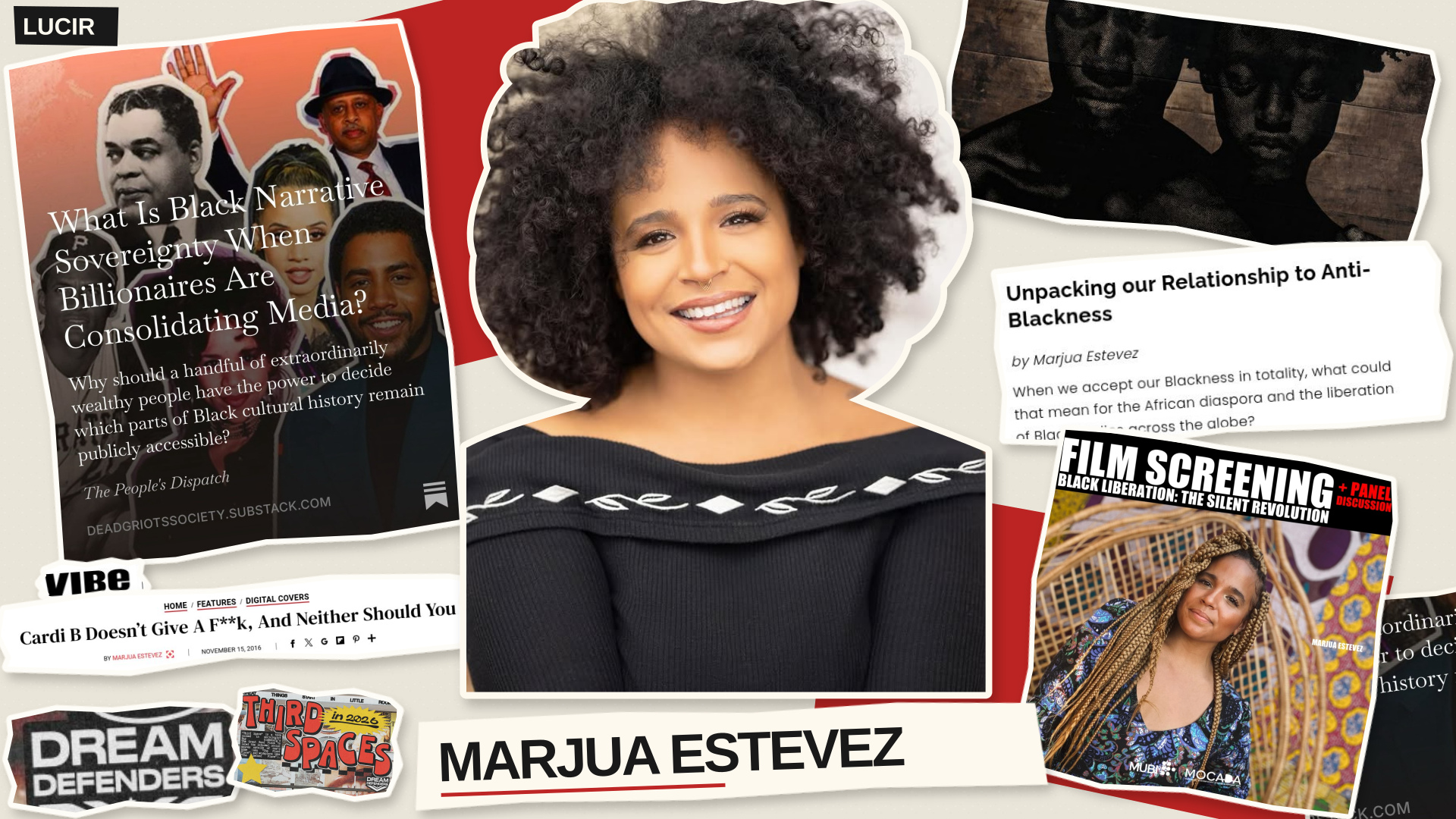
Marjua Estevez deserves that attention.
Go through her work. Really go through it. The music reporting, the criticism, the poetry, the conversations about race and power. A larger picture emerges: a writer whose contribution reaches into how we understand ourselves, whose work we preserve, and what we expect recognition to accomplish.
Consider her 2016 VIBE cover story on Cardi B. Marjua took seriously a woman whose accent, sexuality, work history, and refusal to make herself more palatable gave plenty of people an excuse to dismiss her. The interview made room for intelligence and ambition alongside the personality audiences already recognized.
In a later conversation with NYU’s Latinx Project, Marjua recalled that first cover and the interview and shoot at Cardi’s grandmother’s apartment in Washington Heights. Stacy-Ann Ellis photographed it.
A grandmother’s home. Family. The neighborhood. Those details belong to the story. They help us see the person beyond the public performance.
That kind of editorial judgment deserves credit. So does the labor behind it. We can recognize what Cardi built while also recognizing the people who gave her thoughtful coverage along the way.
Marjua’s attention has reached artists at different stages of becoming. Her 2021 reporting for Condé Nast Traveler brought Tokischa, Red, and a fifteen-year-old J Noa into a conversation about Dominican women in rap. Their ambitions and the barriers around them were worth documenting while their stories were still unfolding.
Her Teen Vogue examination of Afro-Latina women in reggaeton also challenged the narrow version of the genre’s history that leaves women at the margins. La Zista, Lisa M, Glory, Goyo, and DJ Bembona belonged in that discussion, along with the colorism shaping who receives attention.
Music travels. Money travels. Credit can have a harder time finding its way home.
Keeping the people attached to their contributions is cultural work. Every article becomes something another writer, listener, student, or artist can find. Someone looking for a fuller history has somewhere to begin.
And Marjua has pushed beyond the easy celebration of identity.
In her 2020 essay for MoCADA, “Black on Both Sides,” she examined Black solidarity across borders while acknowledging her own proximity to privilege as a light-skinned woman. That willingness to locate herself inside the argument matters. Accountability becomes more credible when the person asking for it also examines where she stands.
I am part of this record, too. Marjua has covered and quoted me, and that connection belongs here openly.
In “Can Afro-Latinos Please Move Beyond The ‘I’m Black, Too’ Rhetoric?”, published by VIBE in 2016, she included my perspective in a discussion about racism, colorism, and the material conditions affecting our communities. The question extended beyond claiming an identity to what we do with that identification.
Five years later, in “For Latinx Heritage Month to Mean Anything, Let Black People Take the Stage,” she returned to the gap between symbolic recognition and meaningful opportunity. She quoted me on hiring and supporting Black and Brown creatives without demanding that they change their hair, voices, or presentation to make other people comfortable.
There was also her 2017 VIBE piece on the celebrity photographs with Donald Trump that I was posting to Instagram. She documented the photographs and my satirical commentary. Those images invite scrutiny; they do not, by themselves, establish anyone’s political endorsement.
Across those pieces, Marjua made room for criticism that could be uncomfortable, funny, and materially specific. Who gets hired? Who receives support? Who gets to challenge the public figures we admire? What changes after the applause?
Her cultural work also extends into production.
For VIBE’s 2018 documentary on Cuban hip-hop and Nehanda Abiodun, Marjua reported from Havana and shared producing credit. The film connected music, political history, and the Black diaspora through people whose experiences gave those connections substance. The directing, editing, and producing credits belong to the collaborators named in the film. Her contribution is part of that collective work.
And she is a writer with an artistic practice of her own.
An Elastic City archive from 2015 documents a participatory walk she designed around hip-hop and poetry, inviting people to create lines from what they encountered in the city. That is a revealing approach to culture: people participate, observe, make something, and discover what their surroundings hold.
She has interviewed Elizabeth Acevedo about The Poet X and covered Aja Monet’s Homemade reading series. Poetry runs through her own background as well as the people she documents. Language is part of her craft and her community.
Her reporting on Ysanet Batista and Woke Foods brought Dominican food, cooperative ownership, and food sovereignty into the same frame. Culture lives in how people feed one another and organize their work. It lives in the choices that allow a community to sustain itself.
That connection becomes especially clear in her movement communications. In a 2024 essay for NewsOne, Marjua described her path from hip-hop media into work with Dream Defenders and the Black women whose leadership shaped that experience. She was writing about the people and relationships that make organizing possible.
Taken together, this is a substantial contribution: documenting artists, questioning erasure, creating work herself, and helping communicate the efforts of people building power.
Calling someone a pillar should mean we have looked at what they help sustain.
With Marjua, there is a body of work to read. There are names and histories made easier to find. There are arguments that ask more of us than a celebration once a year. There is a writer whose range deserves the same curiosity she has brought to other people.
We should give her that attention while she is here, working, creating, and contributing.
Read her. Link to her work. Credit her. Hire her and pay her fairly.
The people who help us understand our culture belong in its story, too.