When a record reaches a dancer, it has already passed through choices that the audience may never see: whom to record, which musicians to assemble, how to arrange a song, and where it can travel. Johnny Pacheco’s place in salsa history lies as much in that infrastructure as in the sound of his flute. The Dominican-born musician did not invent a whole genre alone. He helped build a durable system for making and circulating it.
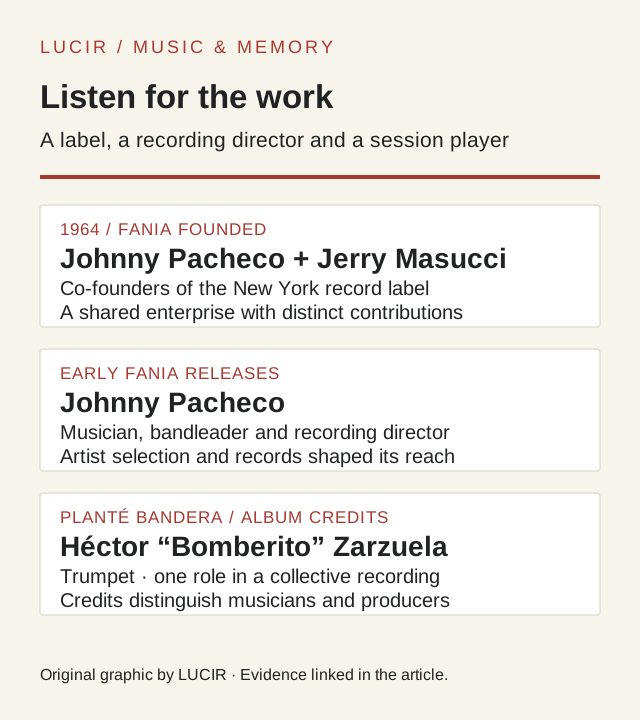
Fania’s own history places Fania’s founding in 1964 and names Pacheco and Jerry Masucci together. The label’s account of Los Compadres identifies his Dominican birthplace and his work as recording director on early releases. Co-founder, bandleader, and producer are different jobs. Treating them separately makes the achievement larger, because it reveals how much of the music depended on continuing coordination rather than one moment of invention.
Fania made a label into a gathering place. Its artists recorded and toured as the All Stars, bringing singers and instrumentalists into combinations that could be heard far beyond New York. The label’s timeline records new signings and the assembly of the All Stars at the Red Garter in 1968. That is a history of distribution and market power as well as musical exchange. The Smithsonian’s account of Yomo Toro’s cuatro follows one musician into a Fania session with Willie Colón and Héctor Lavoe; it makes clear that a signature sound could enter through a player’s particular instrument and judgment. The label’s success was collaborative, even when its corporate name was singular.
The recording credits keep that labor visible. Fania’s page for Planté Bandera lists Héctor Zarzuela on trumpet alongside other horns, singers, percussionists, an engineer, arrangers, producer Luís “Perico” Ortiz, and director Tommy Olivencia. A National Register account of Manhattan’s Dominican Historic District identifies Zarzuela as a Dominican trumpeter and Fania All Stars member. His credit establishes specific performance labor; it should not be inflated into a claim that he arranged or produced that album. The same Fania page distinguishes the people who did those jobs.
Pacheco’s role becomes easier to understand beside those credits. The Library of Congress’s recording registry credits for Celia & Johnny name Masucci as producer and Pacheco as both composer and performer, alongside the other people who made the record. Salsa drew on Afro-Cuban forms, Puerto Rican and Dominican musicians, jazz, and New York’s Spanish-speaking audiences. Pacheco was a foundational architect of its record-and-stage network, not its sole originator. That distinction leaves room to hear both his leadership and the hands that made each session work.