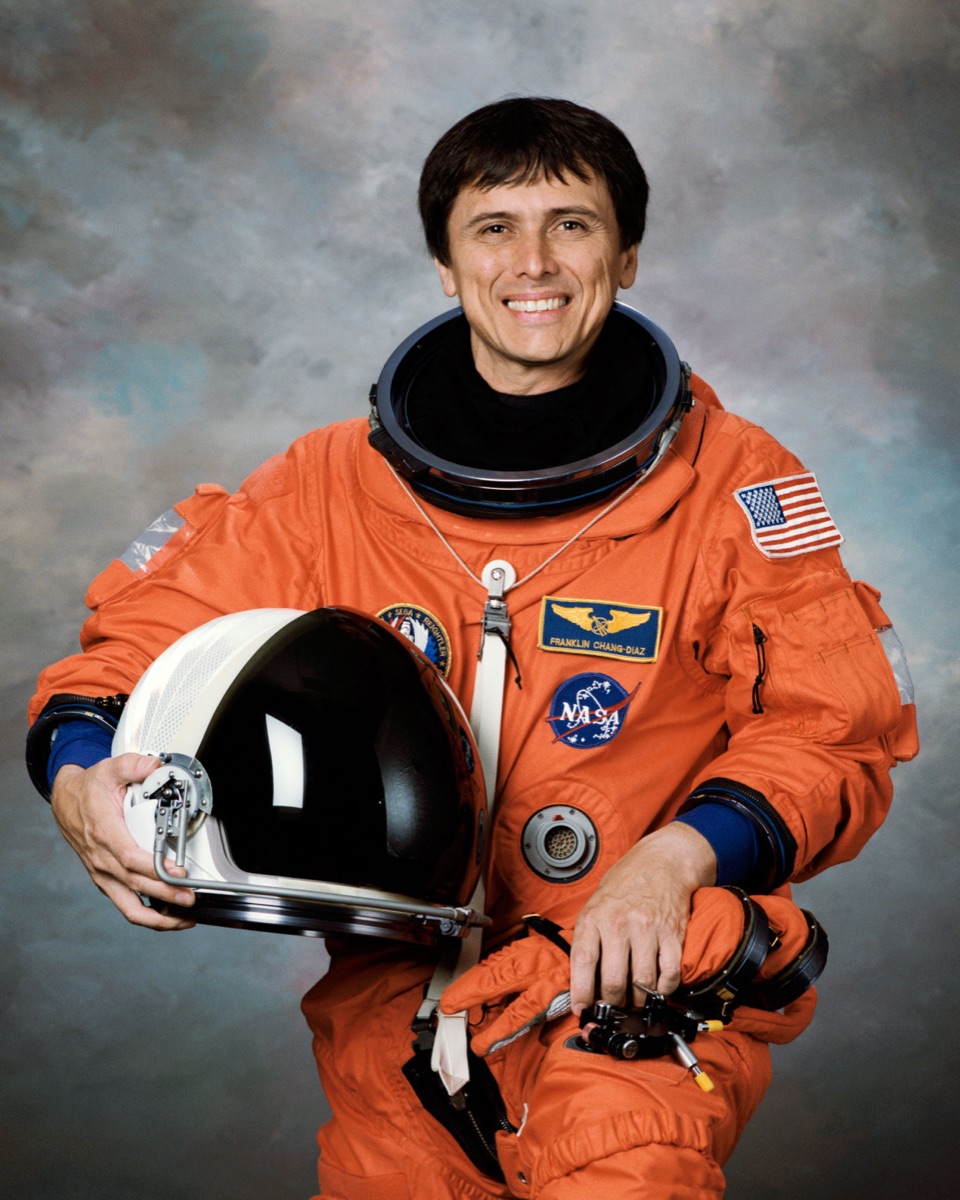

A plasma rocket can sound like a shortcut to another planet. Franklin Chang-Díaz has spent decades working on a more stubborn question: whether a high-power engine can run long enough, reliably enough, to be useful in space. NASA records his seven shuttle missions and his leadership of the Advanced Space Propulsion Laboratory from 1994 to 2005. Those credentials explain how an astronaut and applied-plasma physicist could sustain the project. They do not establish that the engine has flown.
NASA’s biographical record says Chang-Díaz led early work on VASIMR, the Variable Specific Impulse Magnetoplasma Rocket, then founded Ad Astra Rocket after retiring from the agency in 2005. The principle differs from the chemical rockets that lift spacecraft off Earth. Electrical energy ionizes a propellant into plasma; electromagnetic fields heat and direct it to produce thrust. That broad description is a design aim, not a measured promise of rapid trips to Mars. A useful mission would also need power, thermal control, propellant, integration, and a successful demonstration outside the laboratory.
A 2021 technical paper from Ad Astra reports long-duration testing of the VX-200SS engine at total power around 70 kilowatts. Its account is valuable partly because it describes a limit: a planned hundred-hour firing at the highest possible power was interrupted by a faulty component. The test still produced lengthy runs and data on temperatures and system behavior. The relevant news is neither instant failure nor proof of operational readiness. It is that endurance reveals engineering problems that a brief, dramatic plume cannot.
Chang-Díaz’s astronaut career is often told as an improbable personal ascent from Costa Rica to seven shuttle flights. That story is true as biography, but it can make VASIMR look like the inevitable sequel to a record-setting career. It is better understood as a separate technical program with its own sequence of hypotheses, prototypes, failures, and retests. The person who knows spaceflight from inside a spacecraft must still persuade materials, power systems, and mission planners. Experience supplies questions; it does not waive the tests.
The endurance record also clarifies what the public should ask when a propulsion concept is presented as revolutionary. At what power was it tested? For how long? What failed, and what changed afterward? Has the whole system operated in the environment for which it was designed? These questions do not diminish the ambition of plasma propulsion. They make its progress legible. Chang-Díaz’s most consequential contribution may be the persistence of a research program that has to earn each claim in hardware.