Adobe announced Firefly AI Assistant on April 15 as a conversational interface intended to orchestrate work across Creative Cloud applications and generative models. The release also described expanded Firefly video editing, including audio, color and precision-adjustment tools. This is more than another image generator launch. It proposes a change in where a creator makes decisions: less in a sequence of panels and more in a running exchange that can select tools, carry out steps and return an editable result.
That can be useful for a small newsroom, independent filmmaker or community business that cannot assign a specialist to every repetitive production task. A creator might ask for a first cut, identify a visual direction or request adjustments without having to know every menu path. But lowering the interface barrier does not eliminate creative responsibility. A sentence such as “make it feel premium” contains choices about audience, tone, source material, likeness and cultural reference that no assistant can resolve just because it can execute several actions quickly.
Adobe said Firefly included more than 30 creative AI models at the time of the announcement. Choice can be an advantage when a project has distinct needs, but it also turns model selection into a production decision with implications for terms, output behavior and client expectations. A creator who works with a Latino-owned business, artist or publication should be able to explain where a visual came from, what inputs informed it and what can be revised. A fluent chat interface should not obscure those questions behind an attractive result.
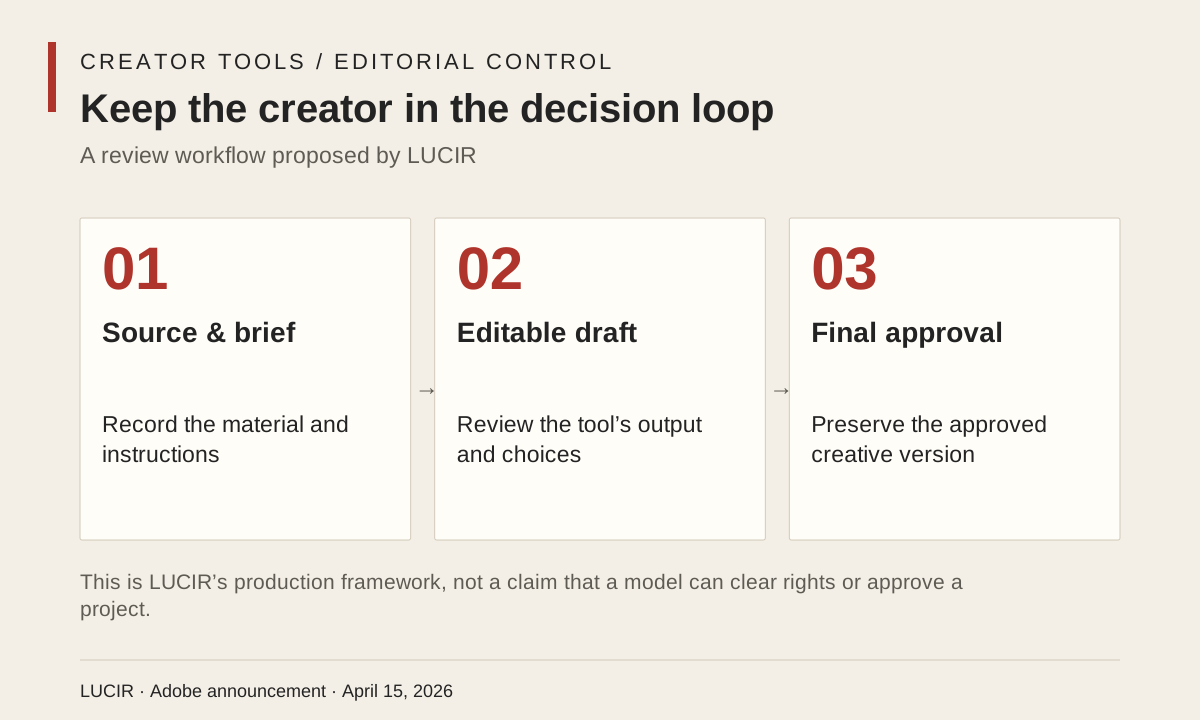
The practical response is to keep a small authorship record alongside the project: the source assets, the material instruction, the selected model or tool, the major edit decisions and the final approved version. That is not paperwork for its own sake. It protects the difference between a rough generative pass and the finished work a team intends to stand behind. It also makes it easier to return to an editable asset rather than treating a single generated output as the only version that matters.
Adobe’s announcement makes a broad promise about creative assistance, not a judgment about any particular creator’s voice. Its clearest opportunity is to reduce friction around routine execution. Its harder test is whether creators retain clear places to direct, question and reject the system’s choices. In a field where style is often mistaken for authorship, that distinction matters. A tool can make production faster while still leaving the creator responsible for what the work says, whom it represents and which decisions remain human decisions.