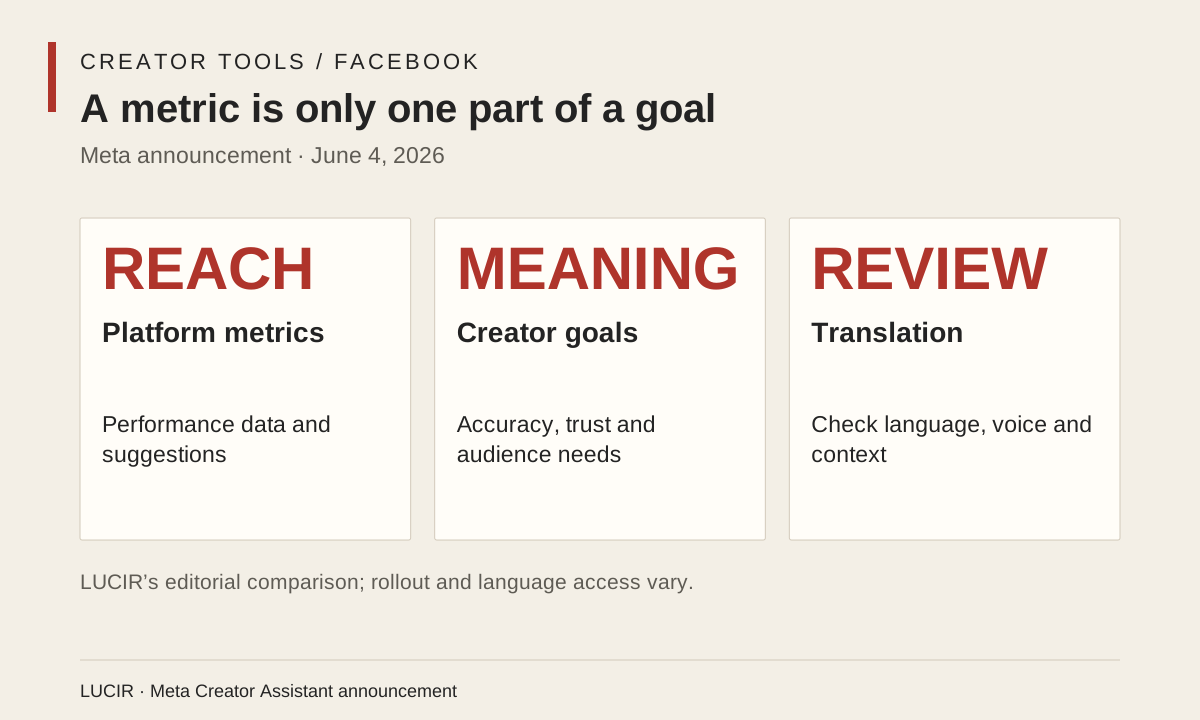
Facebook announced Creator Assistant on June 4, describing a dashboard tool that answers questions based on a creator’s content, audience, performance and stated goals. The announcement also said the company was expanding Reels AI translations to more languages. Together, these changes put two kinds of platform judgment closer to the publishing moment: an interpretation of what has performed and a way to move a video across language boundaries. Neither change automatically improves a creator’s work, but both can alter what gets measured, adapted and repeated.
The potential benefit is clear. A creator with a small team may not have time to translate charts into hypotheses after every post. A conversational assistant can surface patterns and suggest questions to test, while translated Reels can make a video more reachable to audiences that do not share the source language. For Latino creators working across Spanish, English, Portuguese or other languages, wider linguistic access can matter. Yet access is not the same as equivalence. Translation must carry meaning, humor, regional language and editorial intent, not only literal words.
Meta says Creator Assistant gives personalized responses and becomes more useful as it learns a creator’s goals. That makes goal-setting a central creative act. If the objective is only watch time or follower growth, the assistant’s advice will likely reinforce a narrow version of success. A publication, educator or artist may also care about accuracy, audience trust, sales, community response or whether people understand a difficult idea. Those outcomes may be less visible in a dashboard, but they belong in the brief a creator uses to evaluate advice.
The release does not promise that platform suggestions are neutral or that a translation will represent every dialect and cultural reference well. Creators should therefore review the proposed analysis against their own records and watch translated versions before they become the public version. A simple production checklist helps: keep the original file, preserve the approved transcript, review captions and audio in the target language, and note where a human editor made a culturally specific correction. That creates a way to learn from the feature without handing over final editorial judgment.
Creator Assistant is a useful indicator of where platform work is heading. Analytics, ideation and localization are no longer separate tasks performed in different places; they are becoming a continuous interface. The opportunity is real for people who have been excluded from expensive production support. The risk is that a platform’s definition of an effective post becomes the default definition of meaningful communication. A creator should use the assistant to ask better questions, while keeping the right to decide what their audience needs to hear.