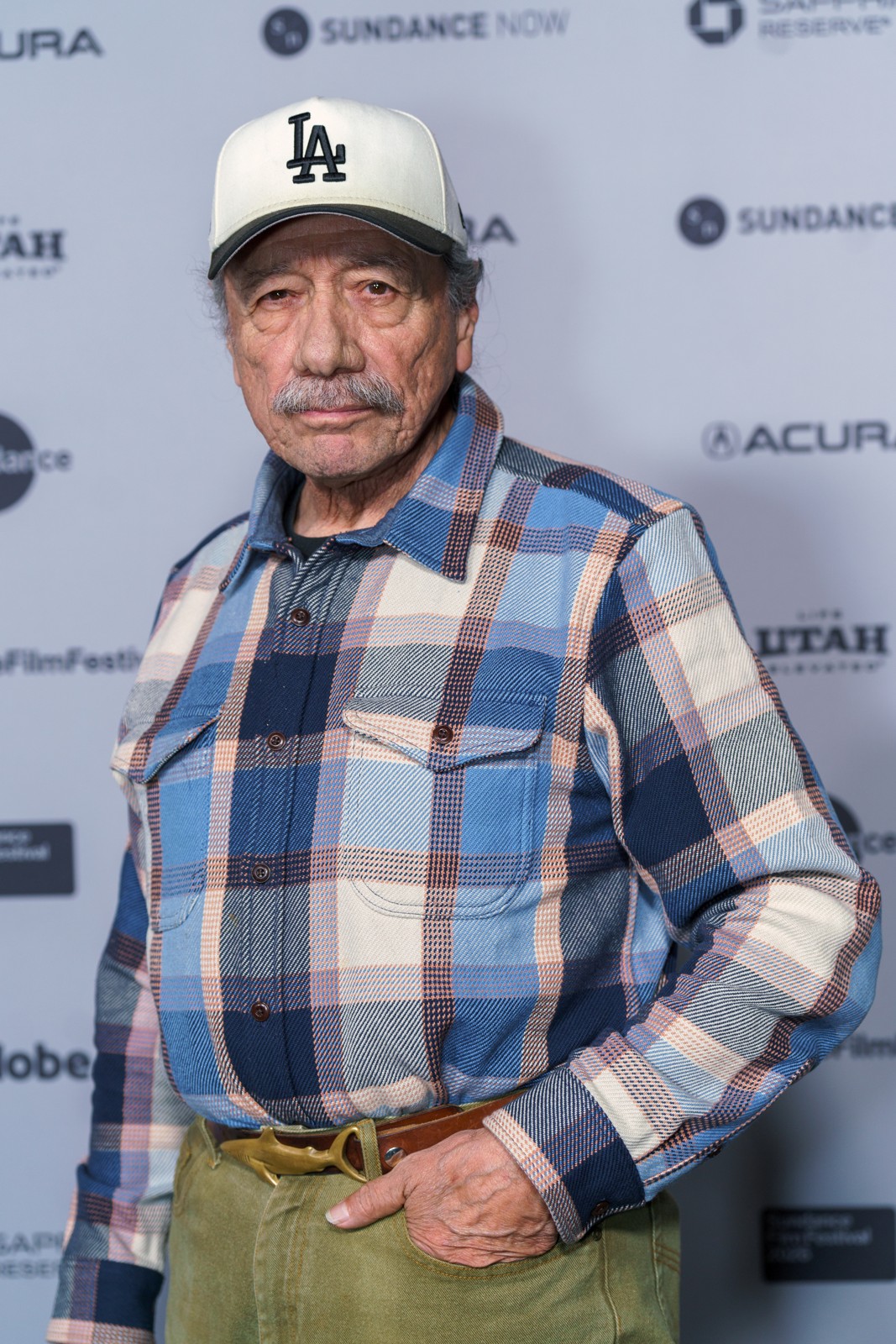

Edward James Olmos returned to El Pachuco this year with somebody else's story to tell. In David Alvarado's documentary American Pachuco: The Legend of Luis Valdez, he narrates as the figure he played in Valdez's Zoot Suit. Sundance's account of the January 2026 premiere records Olmos bringing the character to the stage as well. An earlier performance had become a way into a new film.
That connection gives the veteran actor's year a particular shape. Valdez's work runs through theater, filmmaking and organizing; Alvarado's documentary introduces that life to another audience. Olmos contributes a voice already connected to the history being told. For viewers familiar with Zoot Suit, the return can carry a memory. For those meeting El Pachuco for the first time, it offers an entrance.
A Latino cultural archive cannot depend only on the people who happened to be there. Films disappear from easy circulation, productions close and younger audiences arrive with different points of reference. A new documentary gives a story another occasion to be encountered. The original work remains its own achievement; the new work creates another relationship to it. Olmos's participation makes that exchange visible without requiring a viewer to have mastered the history beforehand.
His institutional work raises a related question: who gets the opportunity to make the next film? The Los Angeles Latino International Film Festival, which Olmos co-founded in 1997, held its 25th edition from May 27 through 31, 2026. The edition included a new Best Feature Film Award and LALIFF Connect, its market and creative forum. An anniversary offered the festival an occasion to address what filmmakers need around a screening.
A seat in a theater and a meeting with someone who can support a project do different jobs. Neither guarantees a career. Together, however, they recognize that the life of a film includes the work required to get it made and the work of finding its audience. LALIFF's history connects exhibition with educational and professional programs. That wider frame is useful when representation is too easily reduced to who appears in a finished image.
Seen together, the documentary and the festival suggest how an established performer can remain active without every new chapter depending on a larger starring role. Olmos can help a colleague's history reach viewers and help maintain an institution that introduces other filmmakers. Those contributions have different authors and collaborators; they belong in the same account of a working life.
The question now is what audiences do with those openings. Watch the new portrait of Valdez, return to the earlier work, and follow the filmmakers coming through the festival. Olmos's 2026 activity gives us reasons to look in all three directions.